
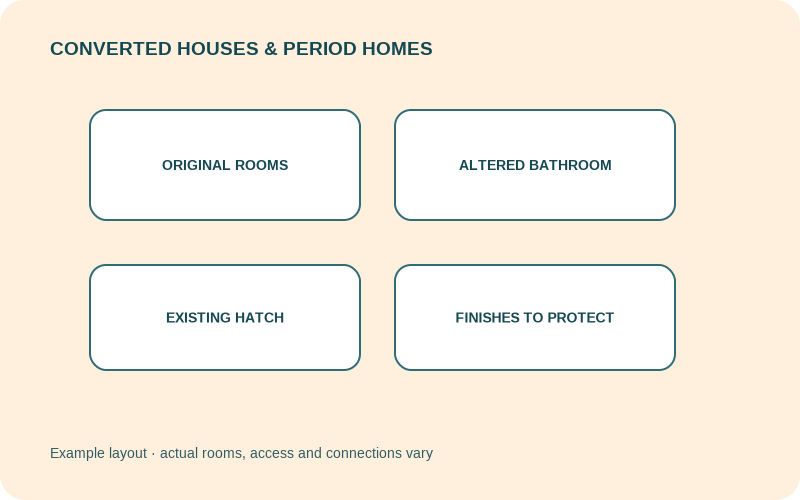
Start with the current layout
A former whole house may now contain separate dwellings, while a bathroom or kitchen may have moved from its original position. Give your floor, entrance and the affected room. If plans or earlier work records are available, provide them as supporting information and explain anything known to have changed since they were prepared. Building age does not establish pipe material or condition.
Victorian flats and apartments need their own layout description
A Victorian flat or apartment may occupy part of a purpose-built block or a converted house. “Victorian” describes an era, not the present supply, waste route or pipe material. Describe subdivision, relocated wet rooms and any known changes after purchase before an investigation is scoped.
Describe existing access before creating new access
Tell the person assessing the fault about a service cupboard, bath panel or previously used hatch. A damp mark beside decorative joinery is not sufficient reason to open that exact surface immediately. Ask what the observations suggest, what can be inspected through existing access and what a proposed new opening is expected to establish.
Separate investigation, repair and reinstatement
Ask whether the attendance covers diagnosis only or an agreed repair, and who would replace disturbed flooring, joinery or decoration. Record the scope of any opening-up work and how additional work will be approved. A pipe repair may stop the source without drying the materials or restoring the room. Those stages need separate discussion where relevant.
Raise known conservation constraints early
Council appraisals describe villas and tenements in parts of Morningside, and terraces and mews in the New Town. These are area contexts, not proof that your individual property is listed. If listing or protected features are known to apply, raise them when proposed alterations are discussed and seek the appropriate advice; do not assume every minor repair has the same consent requirements.
An effective enquiry in five details
- Current occupied floor and practical entrance.
- Visible symptom and its timing, without recreating damage.
- Known room alterations or subdivision.
- Existing inspection access and finishes needing care.
- The contact who can agree the investigation and any subsequent work.
Sources and further reading
General information for preparing an enquiry. This guide does not diagnose a property, establish legal responsibility or confirm a booking, specialist capability or attendance time.

