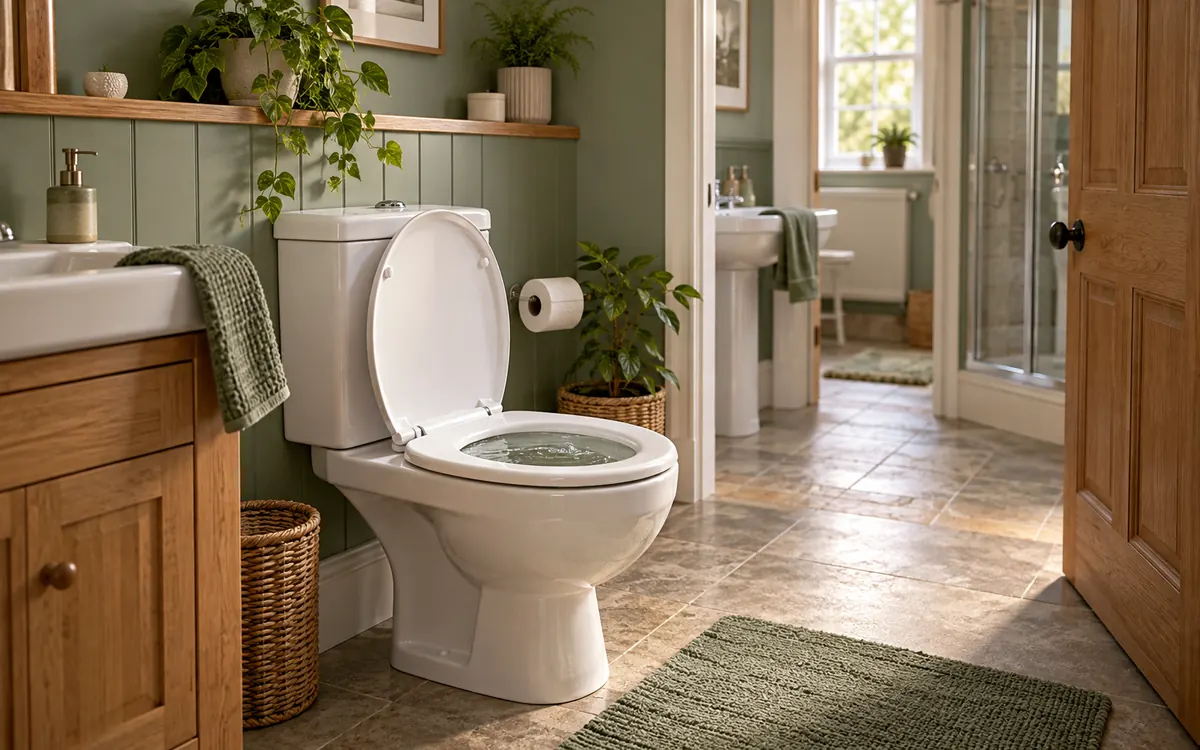
Is it a blockage or a flushing fault?
A toilet that rises towards the rim, drains very slowly or leaves waste behind may be obstructed. A cistern that does not refill, a handle that does not operate or a flush that is consistently weak can instead indicate a fault with the flushing mechanism. These symptoms need different repairs, so describe what the water actually does.
Check whether the basin, shower or another toilet is also draining poorly. Several affected fixtures, gurgling elsewhere or wastewater appearing in another fixture are reasons to stop experimenting and seek a drainage assessment. A symptom is a clue, rather than proof of where the blockage sits.
What to do before trying anything
- Stop flushing if the water is rising. Another flush can turn a contained blockage into an overflow.
- Keep children and pets away. Avoid contact with wastewater and protect nearby possessions without stepping into contaminated water.
- Check from a safe position whether other fixtures are affected. Stop using them if they contribute to a backup.
- Tell anyone attending whether a drain cleaner or other chemical has already been added. Do not mix products.
When is a toilet plunger reasonable?
For a contained, apparently local blockage, a toilet plunger may be a reasonable first attempt if the bowl has enough spare capacity and no chemical product has been added. Follow the tool instructions, keep the seal over the outlet and use controlled movements to limit splashing. Wear suitable gloves and stop if the water rises or the obstruction does not clear.
Do not push improvised rods, wire hangers or rigid objects into the toilet. They can damage the bowl or lodge an object further along the waste pipe. If you suspect a toy, sanitary product or another solid item has been flushed, explain that before arranging a repair.
What if the toilet blocks again?
A toilet that briefly clears and then blocks again needs its cause investigated. Possible explanations include an item remaining in the waste pipe, restricted flow or a fault further downstream. Repeated plunging cannot establish the condition of a hidden drain.
Depending on the symptoms and access, a plumber may recommend clearance followed by further inspection. A CCTV survey is useful when there is a specific reason to inspect the drain; it is not automatically necessary for every blocked toilet.
Preventing another blockage
Put wipes, sanitary products and other bathroom waste in the bin rather than the toilet. Water UK identifies flushed wipes as a major contributor to sewer blockages. Keep a bathroom bin available so disposal is convenient.
If a flush remains weak after a blockage is removed, arrange an assessment of the toilet rather than assuming the drain is still blocked. Recording when the problem happens can help distinguish an intermittent flushing issue from a recurring obstruction.
Booking help in an Edinburgh flat
Give your full postcode, floor, entry arrangements and whether there is another usable toilet. For a rented property, contact the landlord or agent about authorisation. If several flats have problems, tell the factor or other owners: a shared drainage issue may require coordinated access and agreement about responsibility.
Before booking, ask what the attendance charge covers, how further work is approved and whether investigation or drain clearance is included. Avoid agreeing to a fixed repair based solely on a symptom that has not been inspected.
Further reading and sources
General guidance for homeowners. Diagnosis and work requirements depend on your property and equipment.